
Why Strong Moms Prioritize Core Recovery Before Heavy Weights
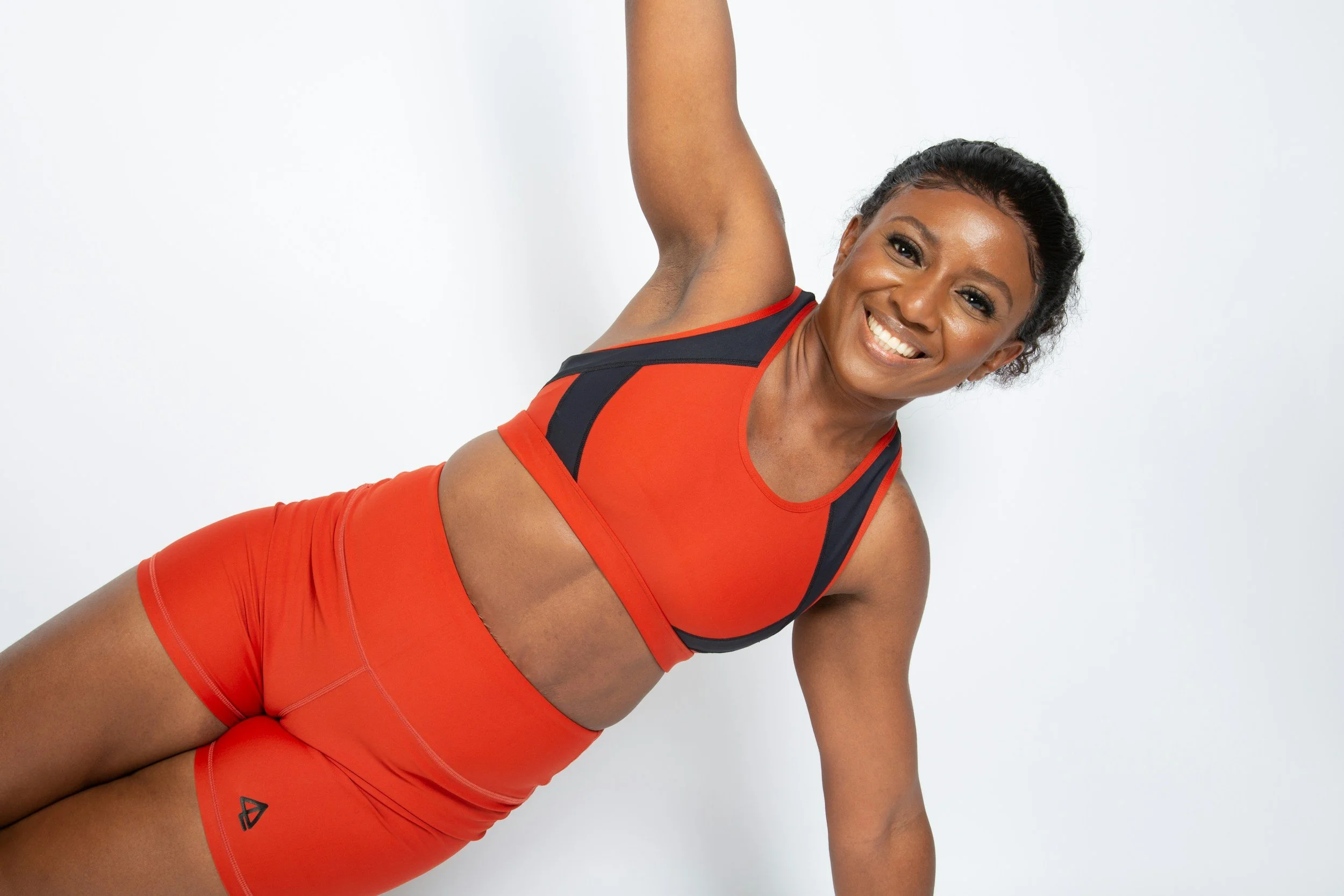
“But returning to heavy strength training before your core has fully recovered can actually slow your progress—and in some cases, cause long-term problems.”
After having a baby, it's completely understandable to want to jump back into your favorite workouts. Many women are eager to regain their strength, lose pregnancy weight, or simply feel like themselves again. But returning to heavy strength training before your core has fully recovered can actually slow your progress—and in some cases, cause long-term problems.
As a Women's Functional Strength Specialist and Occupational Therapist, I see many women who begin lifting heavy weights before rebuilding their deep core muscles. While they may feel "healed" because they received medical clearance at six weeks postpartum, their body often isn't ready for the demands of heavy squats, deadlifts, overhead presses, or high-impact exercise.
The strongest athletes don't skip the foundation—and neither should you.
Pregnancy Changes More Than Your Abs
During pregnancy, your body undergoes incredible changes to make room for your growing baby.
Your abdominal muscles stretch significantly, your connective tissue becomes more flexible due to hormonal changes, your pelvic floor supports increasing weight, and your breathing mechanics change as your diaphragm is pushed upward.
These adaptations are normal—but they also mean that your core functions differently after delivery.
Your "core" isn't just your six-pack muscles.
It includes:
Your diaphragm
Deep abdominal muscles (especially the transverse abdominis)
Pelvic floor muscles
Multifidus muscles along the spine
Deep stabilizing muscles surrounding your trunk
These muscles work together like a pressure system to stabilize your spine and transfer force safely throughout your body.
When one part isn't functioning well, the entire system compensates.
What Happens If You Lift Heavy Too Soon?
Many postpartum women feel capable of lifting heavy again because their muscles are no longer sore or because they exercised throughout pregnancy.
Unfortunately, strength and stability are not always the same thing.
If your deep core isn't coordinating properly, every heavy lift increases pressure inside your abdomen.
Normally, your core manages this pressure efficiently.
But when the system is weak, that pressure has to escape somewhere.
This can lead to:
Worsening diastasis recti
Increased abdominal doming or coning
Pelvic floor dysfunction
Urinary leaking during exercise
Pelvic heaviness or pressure
Low back pain
Hip pain
Poor lifting mechanics
Shoulder and neck compensation
Increased risk of injury
Instead of becoming stronger, your body simply becomes better at compensating.
Heavy Lifting Doesn't Cause Diastasis Recti—Poor Pressure Management Does
One of the biggest misconceptions is that lifting weights causes diastasis recti.
The truth is more nuanced.
Heavy lifting itself isn't the problem.
The problem is lifting more than your core can currently manage.
When your abdominal muscles cannot properly control intra-abdominal pressure, the connective tissue between the abdominal muscles (the linea alba) experiences excessive stress.
Over time, this can:
Increase abdominal separation
Delay healing
Prevent tension from returning to the connective tissue
Make your core feel weak despite exercising
The goal isn't to avoid lifting forever.
The goal is to earn heavy lifting by rebuilding your foundation first.
Why Core Restoration Makes You Stronger
Many women worry they'll lose progress if they spend several weeks rebuilding their core.
The opposite is usually true.
A strong, functional core allows you to:
Lift heavier safely
Generate more power
Improve balance
Increase stability
Reduce injury risk
Improve athletic performance
Protect your pelvic floor
Maintain better posture
Think of your core like the foundation of a house.
You wouldn't build a second story on a cracked foundation.
Your body deserves the same attention.
Signs Your Core May Not Be Ready for Heavy Lifting
If you notice any of these during exercise, it's time to rebuild before increasing intensity:
Abdominal doming or coning
Persistent diastasis recti
Urine leakage
Pelvic heaviness
Low back pain
Holding your breath during lifts
Feeling unstable during squats or deadlifts
Difficulty maintaining proper posture
Core shaking during simple exercises
These aren't signs that you're weak.
They're signs your body is asking for a stronger foundation.
How to Restore Your Core the Right Way
Core restoration isn't about doing endless crunches.
Instead, it focuses on retraining the muscles that provide stability before adding heavy loads.
A progressive core restoration program should include:
1. Breathing Mechanics
Learning how your diaphragm and pelvic floor work together creates the foundation for every movement.
2. Deep Core Activation
Exercises targeting the transverse abdominis help restore stability without increasing unnecessary pressure.
3. Pelvic Floor Coordination
Your pelvic floor should contract, relax, and respond naturally during movement.
4. Functional Movement Patterns
Squats, hinges, carries, and presses are gradually reintroduced while maintaining proper pressure management.
5. Progressive Strength Loading
Once your foundation is solid, heavier resistance can safely be added without compensations.
Strength Is Built From the Inside Out
Returning to heavy lifting isn't a race.
It's a progression.
Taking time to restore your core doesn't delay your goals—it accelerates them by giving your body the stability it needs to build real, lasting strength.
Whether your goal is lifting heavier, running faster, keeping up with your children, or simply moving without pain, your core is where that journey begins.
The women who build the strongest bodies aren't the ones who rush back into intense workouts.
They're the ones who build strength from the inside out.
Ready to Build a Stronger Foundation?
If you're postpartum and unsure whether your core is ready for heavier strength training, my Functional Strength Method is designed specifically for women who want to regain strength safely and confidently.
Inside my online coaching program, you'll learn how to restore your deep core, improve pelvic floor function, rebuild total-body strength, and progress to lifting heavier without worsening diastasis recti or risking injury.
You don't have to choose between healing and getting stronger—you can do both.
Ready to train with confidence? Join my online coaching program today and build the strong, functional body you deserve—starting with the foundation that supports everything else.